


Nursing homes will be paid $2 billion over the next four months if they have lower Covid-19 infection and mortality rates than their local communities in a program that will test a new federal government framework for measuring quality in health care.
The initiative will be announced to nursing homes Thursday afternoon, an HHS spokesperson said. The incentive payment program is heavily weighted towards infection control, with 80% of the money directed toward nursing homes that are below their county’s infection rate. Nursing homes that are under an estimated mortality rate threshold are eligible for 20% of the funds.
This program provides “meaningful financial incentives” for nursing homes that can demonstrate they create a safe environment for their residents, Jim Parker, senior adviser for health reform to the secretary of health and human services, said in an interview.
The quality framework, put together by officials at the Department of Health and Human Services and a panel of top health executives and academics, outlines how the government plans to rework thousands of quality metrics. The roadmap focuses on improved data sharing and infrastructure, increased industry involvement in governance of quality, and the selection of fewer measures that are more effective.
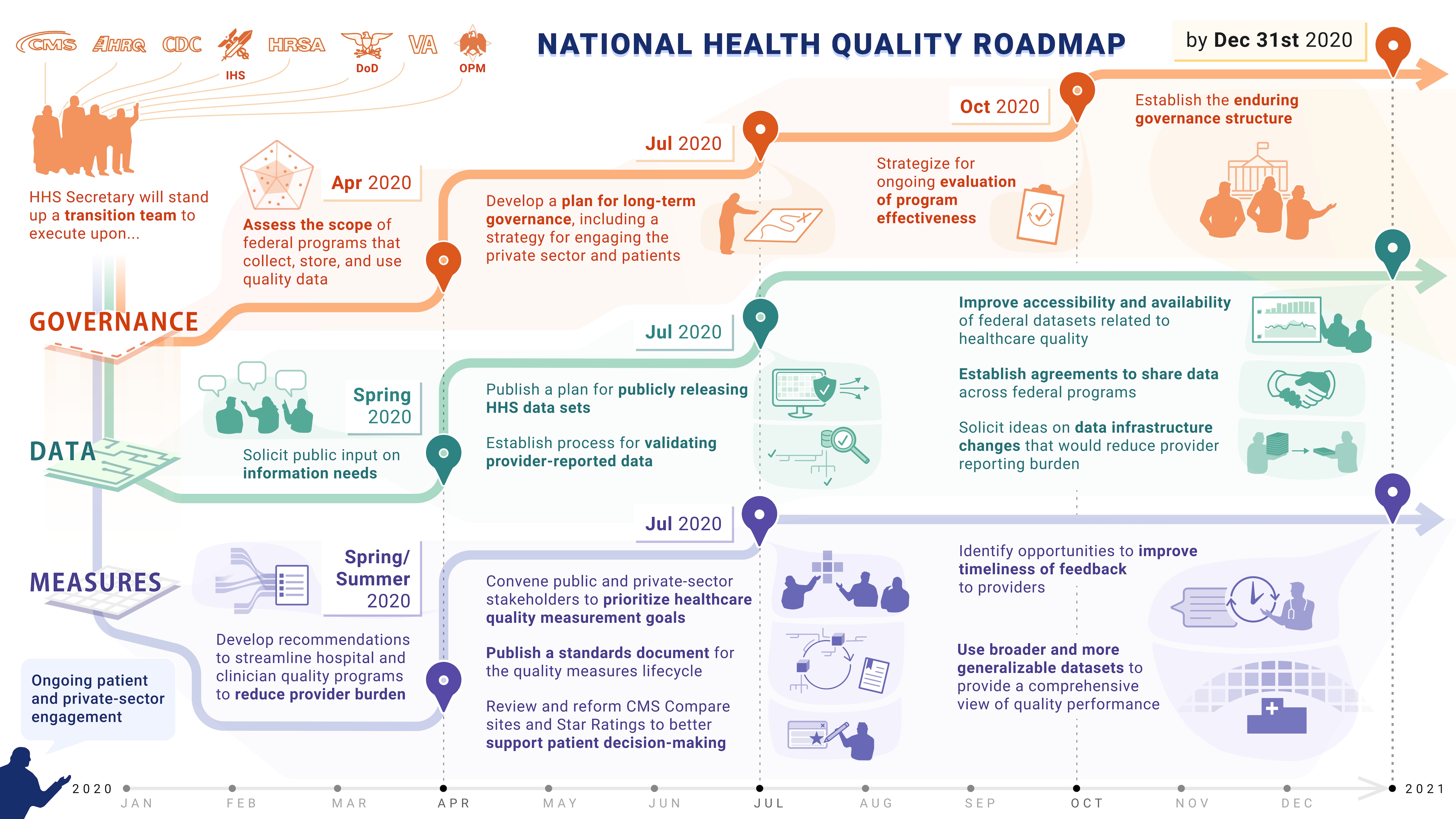
If the program is successful, the department plans to expand it to other facilities or other diseases, which could improve quality across the health-care industry.
The plan is ”putting a couple billion dollars behind a pay-for-performance program that is adhering to these principles” of the quality framework for the first time, Paul Mango, the HHS deputy chief of staff for policy, said in an interview.
As of Sept. 15, there were 76,270 Covid-19 deaths at nursing homes and other long-term care facilities in 47 states, according to the Kaiser Family Foundation.
About 216,000 nursing home residents have been confirmed to have Covid-19, with an additional 129,000 suspected cases, according to the Centers for Medicare & Medicaid Services. About 53,000 have died of the virus.
Nursing home regulations have frequently created “an unfunded mandate that is often well-intentioned, but expensive to implement,” said Mark Parkinson, president and CEO of the American Health Care Association and the National Center for Assisted Living.
However, the program “recognizes the power of incentives and collaboration, and it’s something that really hasn’t been done before,” he said.
The HHS previously gave nursing homes $4.9 billion from the Provider Relief Fund in May, with no specific quality measure requirements.
Four Months to Test
It’s “important that these participants be able to link their activities to rewards as directly as possible,” which is why they’ll get payments on a monthly basis from September through December, Parker said.
Providing $2 billion to nursing homes is an “enormous amount of money,” Parkinson said, but it will definitely create the incentives that the HHS is trying to achieve, and the “outcome is so important that it’s certainly justified.”
Because results will be coming on a monthly basis, the industry and the HHS will know if it worked very quickly, Parkinson said.
Nursing homes will be measured on two qualities—their Covid-19 infection rate compared to their county’s, and their mortality rate compared to the expected rate based on their infections and resident demographics. Minority groups have had much higher rates of Covid-19 infection and death, with Black Medicare beneficiaries having the highest hospitalization rate of any race, 3.8 times higher than whites.
If facilities have a infection rate lower than their county’s, they will be eligible for the payments, and if they have a mortality rate significantly higher than the expected rate, they won’t.
The $400 million that will be paid out each month will be divided into two pools, with 80% going to nursing homes that are below their county’s infection rate and 20% going to those that qualify under the mortality measure. The payments will be divided up based on each facility’s score. Any facility that is below a set threshold for Covid mortality is ineligible for payments in both categories.
For example, a nursing home with an infection rate of 2% that is located in a county with a 5% infection rate will receive a higher payment than a home in that same county that has a 3% infection rate.
This program will only go through December because the HHS is “extremely optimistic” about having Covid-19 vaccines in early 2021, Mango said, and nursing home residents are expected to be among the first to receive any vaccines.
Parkinson said if there isn’t a Covid-19 vaccine before the end of 2020, nursing homes will need additional financial help and that could be provided by extending this program.
The HHS chose to focus on Covid-19 infection rate and mortality rate because the alternative—measuring infection control—would be burdensome in the middle of a pandemic, said Peter Pronovost, co-chair of the HHS Quality Summit and an HHS adviser for value-based care and health insurance.
Future Expansions
The $2 billion for nursing homes is a pilot for the quality roadmap, and “if this is as successful as we think it’s going to be, then we’ll extrapolate into as much of the industry as we can,” including for diseases besides Covid-19, Mango said.
If the pilot is successful, Pronovost said he would like to see it expanded to emphasize optimizing the care of diabetic patients over time, and not be as focused on certain kinds of health-care facilities. Pronovost is the chief clinical transformation officer at the Ohio-based University Hospitals health system.
Previous programs to pay for outcomes rather than number of services haven’t succeeded in nursing homes because of a lack of funding, Parkinson said.
Parkinson said he hopes the department will consider creating a $1 billion to $2 billion nursing home fund to motivate better quality in a variety of areas—including infection control, patient satisfaction, and others—if this program provides the desired outcome.
Learn more about Bloomberg Law or Log In to keep reading:
See Breaking News in Context
Bloomberg Law provides trusted coverage of current events enhanced with legal analysis.
Already a subscriber?
Log in to keep reading or access research tools and resources.