


Add Venezuela to the long list of polarizing issues that could shape this year’s midterm elections.
Immediate reaction to President Donald Trump’s decision to order US forces to seize Venezuelan president Nicolás Maduro Jan. 3 mostly split along party lines. Republicans generally rallied behind Trump and hailed the removal of a ruler they called a “narcoterrorist,” while many Democrats accused Trump of taking an unconstitutional action without authorization from Congress.
Though foreign policy usually doesn’t play a major role in congressional elections, whichever party can win the messaging war could gain a potential wedge issue in an election where control of the House and the Senate are at stake.
Americans generally oppose military intervention in Venezuela, according to surveys conducted before Maduro’s arrest. According to a Quinnipiac poll in December, registered voters by 63%-25% opposed US military action inside Venezuela and by 53%-42% opposed military attacks to kill suspected drug smugglers on boats in international waters.
Subsequent surveys may show more Republicans coming around to supporting the US campaign to oust Maduro now that Trump is associated with it. Trump losing support from base voters over Venezuela is “not likely to happen,” Seth Masket, a political scientist at the University of Denver, said on Substack Jan. 3.
“On a matter of complicated foreign policy and military affairs, people’s views are quite malleable,” he said.
Raising Concerns
Some Democrats suggested Trump sought to use Venezuela to deflect attention from an affordability crisis at home.
“It’s going to be our number-one focus in 2026,” Senate Minority Leader
If Republicans “really wanted to do what the American people wanted, they’d be focusing on cost of living, not on some escapade in Venezuela which could only lead to trouble,” Schumer said Sunday on ABC’s “This Week with George Stephanopoulos.”
“We should be more focused on improving the lives of Ohioans — not Caracas,” ex-Sen. Sherrod Brown (D), who’s seeking to unseat Sen. Jon Husted (R) in a key race in Ohio, said in a statement.
In the Maine Senate contest, Gov. Janet Mills (D) called on Senate Appropriations Committee Chair Susan Collins (R) to hold the Trump administration accountable and demand answers about the Venezuela operation. Mills aims to unseat Collins.
Graham Platner, a liberal political newcomer opposing Mills for the Democratic nomination, said the operation was “illegal.”
Collins, the only Republican senator from a state Trump lost in the 2024 election, said in a statement Congress “should have been informed about the operation and needs to be involved as this situation evolves.”
Party Outliers
A rare Democratic statement in favor of Trump’s action came from Rep.

Cuellar drew a parallel to the 1990 arrest of Panamanian military dictator Manuel Noriega authorized by President George H.W. Bush and supported by some congressional Democrats.
Maduro’s capture “offers hope to countless victims of narco-violence and supports our friends in Mexico and throughout the region who seek to live without fear, corruption, or criminal control,” Cuellar said in a statement.
Other Democrats offered limited praise, based on their district’s population.
Rep.
Rep.
Two Republican lawmakers who expressed some qualms about Trump’s action won’t be in Congress for much longer.
Rep.
Rep.
Seeking Information
Lawmakers from both parties are seeking briefings about the operation and clarification about what comes next in Venezuela, including what Trump meant when he said the US would “run” the oil-producing nation for an indefinite period.
“Donald Trump claims that he’s going to run Venezuela. He’s done a terrible job running the United States of America,” House Minority Leader
Secretary of State Marco Rubio, a former senator, said Sunday that Maduro’s arrest was “a law enforcement function to capture an indicted drug trafficker” that didn’t require congressional approval.
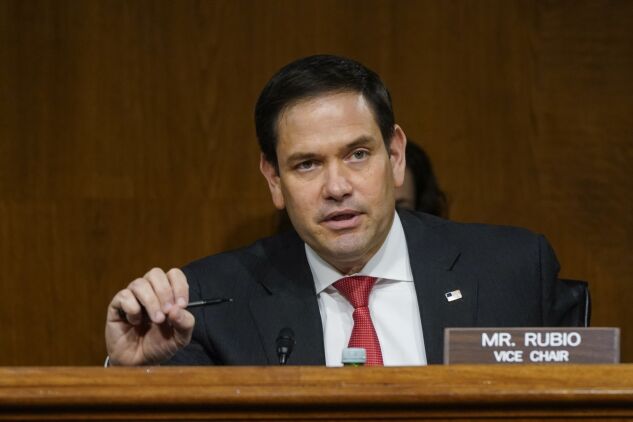
“We will seek congressional approval for actions that require congressional approval,” Rubio said on “Meet the Press.”
In November, the Senate by a 49-51 vote blocked a resolution (S.J. Res. 90) to bar the Trump administration from conducting military strikes against suspected drug traffickers within or outside of Venezuela without an explicit authorization from Congress.
Paul and Sen. Lisa Murkowski (Alaska) were the only Republicans who voted to advance the resolution.
To contact the reporter on this story:
To contact the editors responsible for this story: